3rd International Workshop on Electrical Power and Energy Systems Safety, Security and Resilience (EPESec 2022)
Energy transition poses significant challenges, as the road ahead is focused on integrating higher share of renewables, promoting a more efficient and decentralized energy system, by involving advanced digital technologies and systems such as smart devices, faster and more flexible gateways, smart meters and IoT. However, this transition necessitates the integration of cyber-defense measures and strategies into novel, resilient and self-healing architectures.
The forthcoming smart energy ecosystem is considered as the next-generation power system, which promises self-healing, resilience, sustainability, and efficiency to the critical energy infrastructure. However, due to the increasing digitization of the energy infrastructure, the risk of cyberattacks has risen dramatically, while as the smart energy and power grid is reaching every house and building, the potential of attracting cyber-attackers is magnified. Additionally, legacy systems constitute weak points of failure since they were designed in times when cybersecurity and remote monitoring and control was not part of the technical specifications for the system design.
PHOENIX participation
Phoenix is a co-organizer of this workshop.

Privacy, Ethics and Cybersecurity aspects in Critical Infrastructures
We are pleased to introduce you to Electrical Power and Energy Systems (EPES) Shield against complex incidents and extensive cyber and privacy attacks (PHOENIX), a project funded by the EU Horizon 2020 research and innovation programme.
In this context, the PHOENIX project aims to offer a cyber-shield armour to European EPES critical infrastructure, enabling cooperative detection of large-scale, cyber-human security and privacy incidents and attacks, guaranteeing the continuity of operations and minimising cascading effects in the infrastructure itself, the environment, the citizens and the end-users at reasonable cost. The Project aims to produce a complete EPES security and privacy protection framework, validated by real world scenarios by the means of 5 Large Scale Pilots.
The PHOENIX project aims to reconcile technology development activities with privacy, ethics, security and societal concerns, and to this end an ad hoc methodology has been developed and implemented: the PRESS framework.
In this context, CyberEthics Lab. (partner of the PHOENIX project) is interested to open a public debate with the stakeholders on critical infrastructures (i.e. energy) and existing armours against cyber and privacy attacks.
Specifically, in this workshop entitled “Privacy, Ethics and Cybersecurity aspects in Critical Infrastructures” CyberEthics Lab. is involving research projects from the EPES cluster, in order to show the addressed challenges (e.g. privacy and ethics concerns, compliance with regulatory frameworks and social acceptance of technology) and the proposed solutions with disruptive technologies (e.g. blockchain, internet of things, artificial intelligence).
We would be honoured if you could accept our invitation and be part of the pool of experts, operators and policy makers that will participate in the discussion.
The PHOENIX final workshop will take place in Rome (Italy) on July 7th 2022.
Further details of the event will be provided in case of acceptance.
ROMANIAN ENERGY DAY – 11th EDITION
Repowering the European Energy Sector
A stronger Europe through secure and sustainable energy supplies
Romanian Energy Day (RED), at its 11th edition, builds upon the European commitment towards accelerating the Green Deal by ramping up renewables and boosting energy efficiency, whilst setting the stage to achieve the independence from certain energy imports. Moreover, RED 2022 highlights Romania’s endeavour to strengthen the European energy security by actively diversifying energy sources, resources and transport routs, as well as achieve markets integration by creating an effective link between the South-Eastern and Central European regions.

CIPRE Expo
The latest Critical Infrastructure Protection & Resilience Europe came to a conclusion following 3 days of excellent range of presentations and discussions for securing Europe’s critical infrastructure.
Co-hosted by ICI Bucharest and the International Association of CIP Professionals, held at the magnificent Palace of Parliament, delegates also enjoyed a host of networking opportunities and shared experiences.
PHOENIX was an exhibitor at this event.

Training and Interactive session Boosting the Results Exploitation across European Projects: Impact and the Horizon Results Booster
Results exploitation is one of the most crucial building blocks for digital transformation projects in Europe. Even if the pilots and projects are developed from a technical perspective, without a concrete business model and exploitation plan they cannot reach the market and might fail. In recent years, a couple of supporting initiatives and mechanisms have been established by the European Commission to support the Research projects to boost their results exploitation. The Horizon Results Booster is a service provided free of charge to all Horizon 2020 beneficiary projects, to help with exploitation of European Commission research projects
In OPEN DEI, one of the main aspects of business support is to help the ecosystem projects for the exploitation of their results and pilots. The current event is organized in collaboration with Horizon Results Booster to provide required information and practical instructions to the projects to facilitate their application and use of the service. At the end of the event, there will be an interactive Q&A session to address the questions and doubts of the projects.

Security Research Event 2022
PHOENIX participation
The PHOENIX Project is an exhibitor at the event.
PHOENIX at ENLIT Europe 2021
PHOENIX participation

15th Conference of Slovenian Electric Power Engineers CIGRE-CIRED
The Conference of Slovenian Electric Power Engineers is the largest expert gathering in Slovenian power systems sector. On the conference you will have the opportunity to meet and discuss with the greatest experts and companies that shape the Slovenian electric system of today and tomorrow.
The conference is an excellent opportunity to demonstrate your knowledge and experiences through technical papers and to connect with other like-minded experts. The conference is expected to have 500+ participants.
PHOENIX participation
Uršula Krisper presented PHOENIX at the conference.

Inovacija energetike ’21
Energy Innovation, the 13th Summit of Innovators in Energy, shows you the future of green transformation and is an event where the summit of the innovative, brave and ambitious in energy meets every year. Numerous speakers, a varied program, quality organization and opportunities for networking and exchanging opinions are the characteristics of the meeting with 13 years of tradition.
More than 20 speakers will introduce participants to the guidelines of the energy future: for the first time, on seasonal components of decarbonisation and reliability, energy and hydrogen storage, new infrastructure investments and the integration of other energy sectors. The event is attended by more than 160 participants, who, among other things, choose the best examples of innovation in 2021.
PHOENIX participation
Uršula Krisper presented PHOENIX at the conference.
2nd International Workshop on Electrical Power and Energy Systems Safety, Security and Resilience (EPESec 2021)
EPESec 2021 workshop aims at collecting the most relevant ongoing research efforts in the EPES digital security field. It also serves as a forum for relevant projects in order to disseminate their security-related results, boost cooperation, knowledge sharing and follow-up synergies, and foster the development of the EPES Security Community, composed of security experts and practitioners.
The workshop is co-organized by the following H2020 Projects:
CYBER-TRUST project: https://cyber-trust.eu/
EnergyShield https://energy-shield.eu/
FORESIGHT project: https://foresight-h2020.eu/
PHOENIX https://phoenix-h2020.eu/
SDN-microSENSE project: https://www.sdnmicrosense.eu/
SPEAR https://www.spear2020.eu/
TOPICS OF INTEREST INCLUDE, BUT ARE NOT LIMITED TO:
Security policies
Risk analysis and management
Vulnerability assessment and metrics
Awareness, training and simulation
Security standards
Privacy and Anonymity in smart/ micro grids, privacy preserving technologies
Threat modelling and detection
Cyber threat intelligence
Federated machine learning
Security architectures
Access control
Malware and cyber weapons
Intrusion detection and visualization
Defense in depth
Monitoring and real time supervision
Perimeter security
Safety-security interactions
Cyber security engineering
Secure communication protocols
Formal models for security (attack trees, indicators of compromise, etc.)
Hardware Security
Resilient ICS/CPS
Application Security
Secure Firmware
Incident Response and Digital Forensics
Incidents and Security Information Sharing
Countermeasures and Mitigation Actions Recommendation
Case studies
Attack simulations
Penetration testing / ethical hacking in OT and IT
Data management and interoperability challenges
EPES market trends and business opportunities
IMPORTANT DATES
| Submission Deadline | New deadline May 28, 2021 |
| Author Notification | June 02, 2021 |
| Proceedings Version | June 13, 2021 |
| ARES EU Symposium | August 17, 2021 |
| All-Digital Conference | August 17 – August 20, 2021 |
The PHOENIX project is a European Union funded collaborative project improving the cyber security of the European electrical power energy systems (EPES), i.e. the so called Smart Grid. PHOENIX aims to offer a cyber-shield armour to European EPES infrastructure enabling cooperative detection of large scale, cyber-human security and privacy incidents and attacks, guarantee the continuity of operations and minimize cascading effects in the infrastructure itself, the environment, the citizens and the end-users at reasonable cost.
PHOENIX participation
Phoenix is a co-organizer of this workshop.

Kick-off Meeting of the Cybersecurity Innovation Cluster
The Cybersecurity Innovation Cluster will have its kick-off meeting on June 4th, 2021. The cluster has been organized under the auspices of H2020 projects PHOENIX, SDN microSENSE, CyberSEAS, EnergyShield and ELECTRON as an independent initiative, supervised by the European Commission. During the kick-off meeting the goals of the cluster will be clearly stated and the plan for the upcoming period will be agreed towards coordinating actions for ensuring cybersecurity and resilience of EPES infrastructures.
PHOENIX participation
Phoenix is a co-organizer of this workshop.

Cybersecurity Standardization Conference 2021
The European Standards Organizations CEN, CENELEC and ETSI, have joined forces with ENISA, the European Union Agency for Cybersecurity, to bring you a virtual Cybersecurity Standardization Conference on ‘European Standardization in support of the EU Cybersecurity Act’, with dedicated sessions on the Radio Equipment Directive (RED), & the Consumer Internet of Things (CIoT) and 5G among others.

EE-ISAC 15th Open Plenary
The upcoming EE-ISAC Plenary will be be covering topics on the European Energy sector with sessions including open discussion and information sharing on:
– Threat Intelligence Management
– NIS Directive
– Network Codes
– International Partnerships
– Involvement in EU projects
The full agenda can be accessed here.
The event is free of charge to attend. It is an open meeting where quality experiences, realities and information will be exchanged in an open, transparent and trusted manner among colleagues.
PHOENIX participation
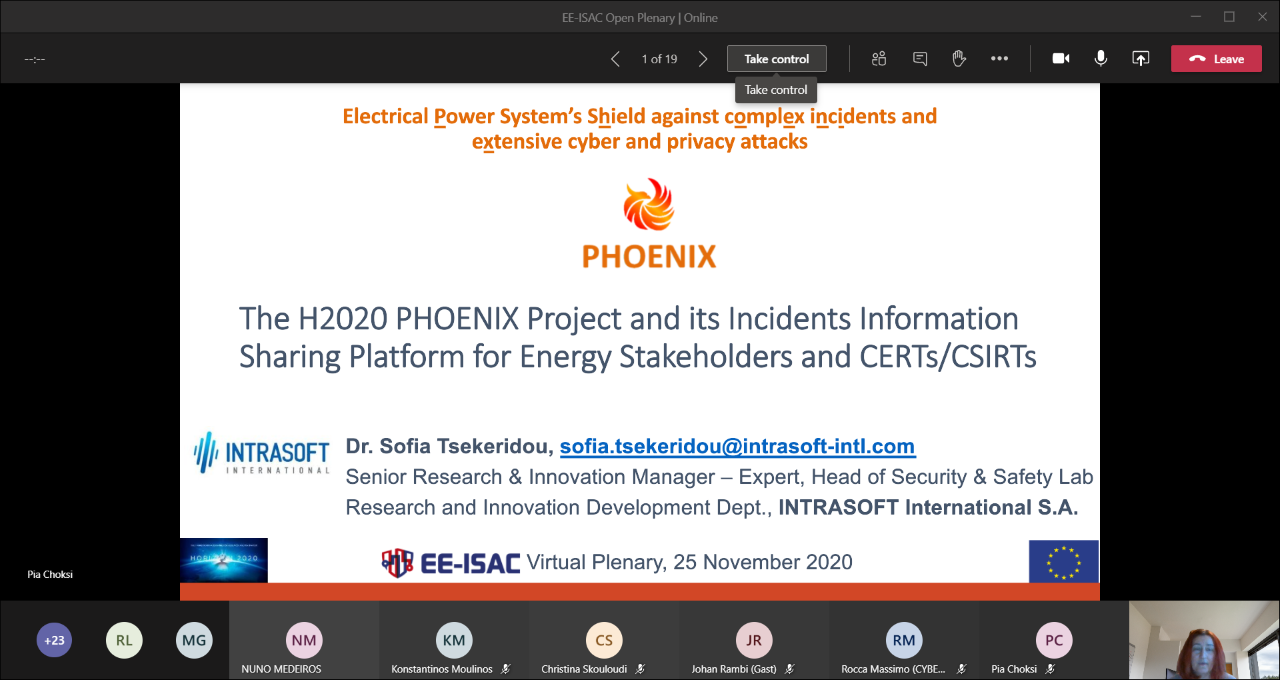
Phoenix and I2SP was presented to the EE-ISAC during the closed group session by Sofia Tsekeridou.
Phoenix also participated and contributed to the BRIDGE Data Management Working Group, providing feedback with respect to the DM WG preliminary draft reports and contributed to the EU data exchange reference architecture version 1, by providing business roles identified within the Phoenix project and mapping them to the Harmonized electricity market roles model (HEMRM).

Synergies with H2020 research projects in digitalization of the energy sector – EDGEFLEX and PHOENIX
EDDIE Webinar wants to respond to key questions raised by the 4th Revolution, addressing the main forces of change in ENERGY Transition: Low Carbon Objectives & Digitalization. Using EDUCATION lenses we will look at the ENERGY Sector to find solutions for the LEARNING Transition, as well.
Synergies with EdgeFLEX and PHOENIX H2020 research projects in the digitalization of energy will allow a better understanding of the landmarks for the mandatory transformation in education as a sustainable response to the new and future requirements.
PHOENIX participation
This online stakeholders consultation event was organized and conducted by CRE.


E.DSO-ENCS-ENTSO-E Webinar Sessions “Cybersecurity: Data Sharing”
Join us for the “Cybersecurity: Data Sharing” webinar sessions co-organized the Association of European Distribution System Operators (E.DSO), the European Network for Cyber Security (ENCS) and the European Network of Transmission System Operators for Electricity (ENTSO-E)!
Discover now the draft agenda and register here for 7 October and here for 21 October.

PHOENIX fourth plenary meeting
PHOENIX participation
The plenary meeting brought together all PHOENIX partners in order to share results, evaluate progress and plan future activities.
PHOENIX third plenary meeting
PHOENIX participation
The plenary meeting brought together all PHOENIX partners in order to share results, evaluate progress and plan future activities.

Stakeholders Consultation Event
Stakeholders Consultation Event and synergies within the European H2020 Projects SOGNO, WISEGRID, PHOENIX, CROSSBOW and DEFENDER. The event is organized by CRE (Romanian Energy Center) as an Online Video-Conference to stimulate discussions and Demonstrations of the Tools and Solutions developed within the EU Projects.
To guarantee your place, please confirm your participation HERE no later than Thursday 16th of April 2020.
Click here for the Video-Conference Invitation and the Event Program.
PHOENIX participation
This online stakeholders consultation event was organized and conducted by CRE.


10th Annual European Data Protection & Privacy Conference

The Smart Homes & Buildings Association’s Energy and Technology Panel (SH&BA)
SH&BA Energy and Technology Panel is chaired by Ashley Pocock of EDF and we will look at what the smart meter roll out means in progressing the smart home. This will lead onward to the latest trends in DSR with an overview of how the operation of DSR is changing and changes as DNOs become DSOs and what this might mean for aggregators. Following this we’ll cover the Internet of Energy and look at the potential of edge computing to retain data at home and thus privacy and we’ll cover cyber security of the smart home with emphasis on energy.
PHOENIX second plenary meeting
The second plenary meeting of PHOENIX was successfully held at INTRASOFT International SA at Athens, Greece on 4th and 5th Feb 2020. The meeting was attended by the consortium partners and the EU Commission Project Officer. The two days saw interesting presentations and discussions about PHOENIX platform architecture, underlying technologies and the upcoming real-life large scale pilots .
PHOENIX participation
The plenary meeting brought together all PHOENIX partners in order to share results, evaluate progress and plan future activities.

Secure Societies “Project to Policy” Kick-Off Seminar
Project PHOENIX was invited to present at the first Secure Societies “project to policy” kick-off seminar organized by REA B4, together with DG CNECT and DG HOME at Brussles on 31 Jan 2020. With an aim to understand the relevant policy drivers and integrate them into the project from the start, Farhan Sahito, Ph.D. presented a view into how PHOENIX will contribute to the implementation of EU policies.
PHOENIX participation
PHOENIX was presented at the 1s secure Societies “project to policy” seminar at Brussels on 31 Jan 2020. With an aim to understand the relevant policy drivers & integrate them into the project, Dr. Farhan Sahito explained how PHOENIX will implement EU policies.


Capgemini Analyst and Advisor Day
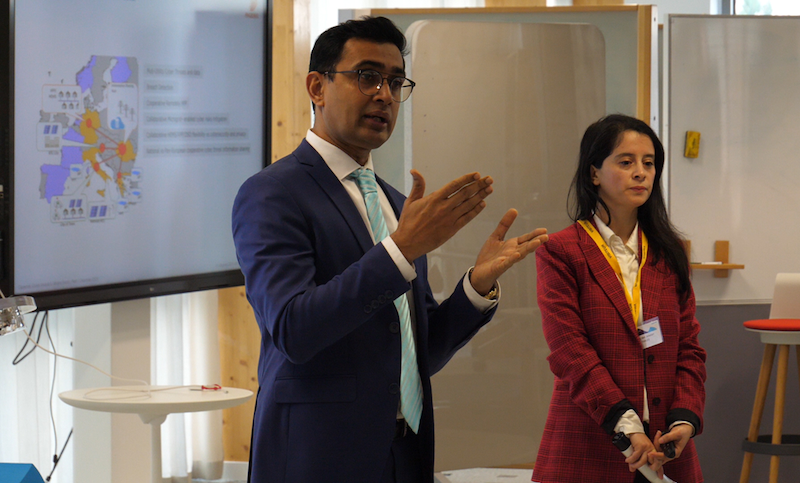 The PHOENIX project objectives, expected impact and technology were introduced by Farhan Sahito (Project Coordinator, Capgemini) and Wafa Ben Jaballah (Thales Group) to the attendees of Capgemini annual Analyst and Advisor Day at Capgemini 147, Issy Les Moulineaux, France on 4 Dec 2019. The event was attended by 31 analysts and advisors from 21 different companies. Among other guests were IDC analysts, Forrester, Gartner, Teknowlogy Group, Markess, as well as consulting firms such as ISG.
PHOENIX participation
PHOENIX was introduced to a wide ranging audience.
ETIP SNET South-Eastern & Western Regions’ Workshop
This South-Eastern and Western Regions’ Workshop aims at
- Presenting national and regional RD&I projects of significant added value addressing energy system integration issues, in line with the thematic priorities of the ETIP SNET Working Groups;
- Identifying unsolved RD&I topics and monitoring the implementation of RD&I activities at national and regional levels in Europe;
- Ensuring consistency between national and European views;
- Stimulating knowledge-sharing between stakeholders and among Member States and associated countries, to foster the efficient implementation of RD&I projects all over Europe.

ENISA, EE-ISAC Plenary & Training
EE-ISAC helps utilities to improve the cyber security and resilience of their grid by enabling trust-based data and information sharing. EE-ISAC is a joint initiative of 4 major European utility companies together with universities, governmental bodies and technology providers.

European Utility Week 2019
Paris 2019 will see an energy trilemma of security, equity and sustainability across an end-to-end European energy experience.

Mediterranean Security Event 2019
This three-day event focuses on multiple security-oriented research areas that have been identified as of high priority by EU. MSE2019 embraces the need for a trust-based, multilateral and cross-sectoral cooperation among the community of Security R&D stakeholders in the European Union. MSE2019 is not only an event but an active inter-national community integrating the experience and transferring the knowledge of experts and professionals.

The World Bank, Balkans Digital Highway Workshop
CERT-RO, Annual International Conference “New Global Challenges in the field of cyber security”
European Technology and Innovation Platform for Smart Networks for Energy Transition Workshop

The PHOENIX project kick-off meeting
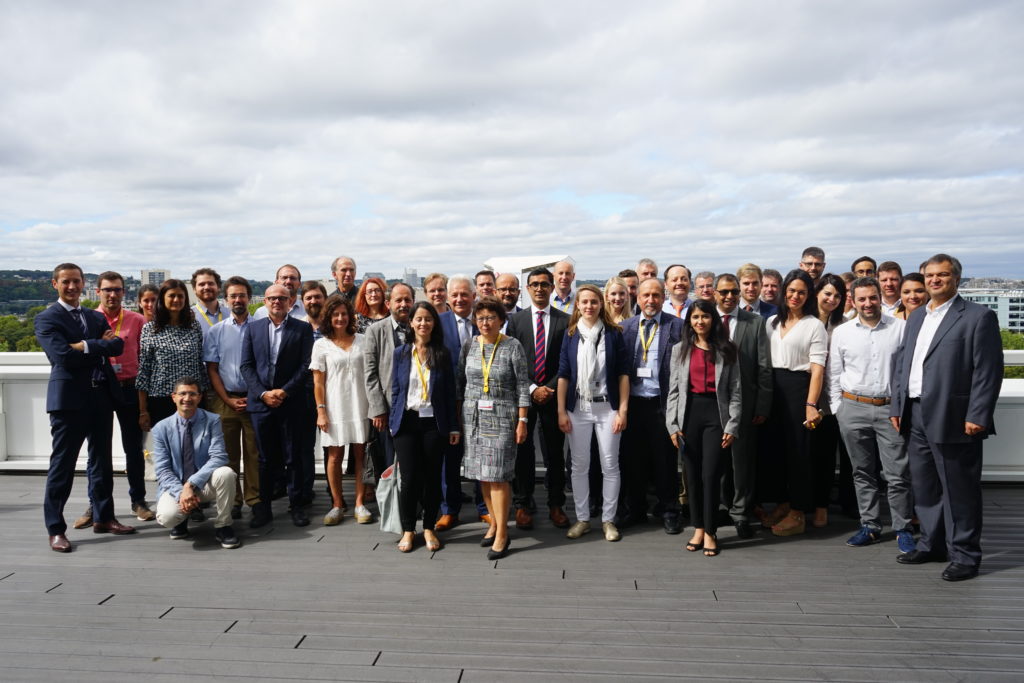
The PHOENIX project held a successful kick-off meeting at Capgemini headquarters in Issy Les Moulineaux, Paris, France on 12 and 13 September 2019. The aim of PHOENIX, funded by the European Commission through the programme Horizon 2020, is to develop cyber-shield armour to the European Electrical Power and Energy System (EPES) infrastructure. It focusses on protection of EPES via prevention, early detection and fast mitigation of cyberattacks.
Led by Capgemini Technology Services CIS France, the PHOENIX consortium brings together twenty-four partners from ten EU member states and associated countries. Representatives of nine European energy utilities, end-user organisations, industry, SMEs, research and academia from France, Greece, Germany, Slovenia, Romania, Italy, Luxemburg, Slovenia, Finland and Norway (Associated country) comprise the project consortium. PHOENIX will run for thirty-six months and is sponsored by EU via a grant of 8 Million Euros.
The European Commission’s Research Executive Agency was represented in the meeting by the PHOENIX’s project and legal officers. Dr. Farhan Sahito, PHOENIX Project Coordinator and Director of Cyber Innovation at Capgemini outlined the main objectives of the project and explained that the project results will enable a cooperative detection of large scale, cyber-human security and privacy incidents and attacks. The outcomes of the project will guarantee the continuity of operations and minimize cascading effects in the infrastructure itself, the environment, the citizens and the end-users at reasonable cost.
 This project has received funding from the European Union’s Horizon 2020 research and Innovation programme under grant agreement N°832989. All information on this website reflects only the authors' view. The Agency and the Commission are not responsible for any use that may be made of the information this website contains.
Related projects